Caramelized Gourmet Grilled Cheese
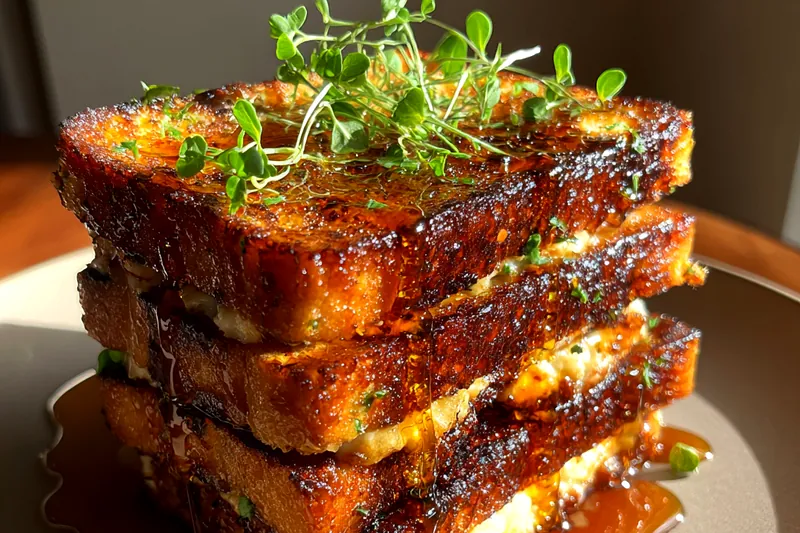
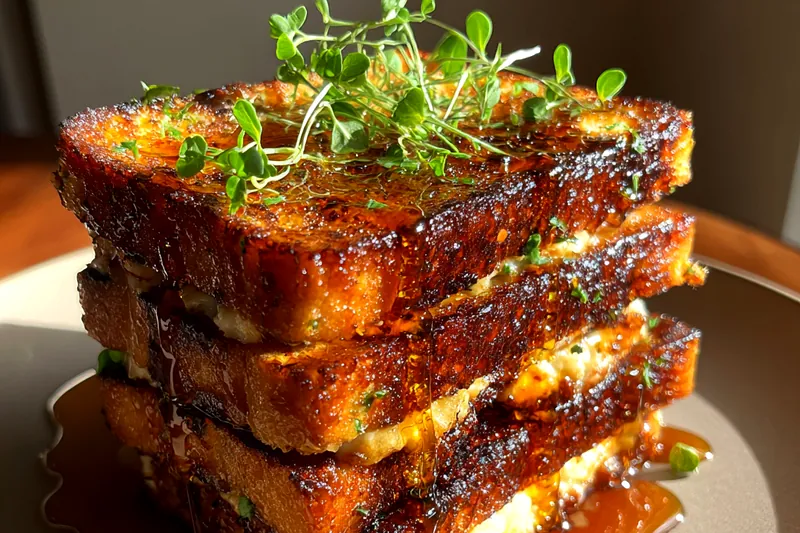
Decadent caramelized grilled cheese sandwich with perfectly golden-brown crust, gooey melted cheese, and fresh microgreens. A sophisticated twist on the classic comfort food.


The Secret to Perfect Caramelization
The key to achieving that stunning caramelized exterior lies in the butter mixture and cooking technique. By combining butter with mayonnaise and honey, you create a spread that browns evenly and develops complex flavors. The mayonnaise adds extra fat and helps the bread brown beautifully, while the honey provides natural sugars that caramelize into that gorgeous golden crust.
Temperature control is crucial for perfect caramelization. Cooking over medium-low heat allows the cheese to melt completely while the exterior develops that deep color without burning. Patience is essential - rushing the process with high heat will burn the outside before the cheese melts. The result should be a crust with an almost candy-like sweetness from the caramelization.
💡 Professional Tip
Let your butter mixture come to room temperature for easy spreading. Apply it generously and all the way to the edges of the bread - this ensures even caramelization across the entire surface. Use a heavy-bottomed pan or cast iron skillet for the best heat distribution.
Frequently Asked Questions
Mayonnaise contains extra fat and emulsifiers that help create an incredibly even, golden-brown crust. It also adds a subtle tangy flavor that complements the sweetness from the honey and richness of the cheese.
Absolutely! Try fontina, white cheddar, brie, gouda, or even blue cheese. Use a combination of melting cheeses and sharper aged cheeses for the best flavor and texture. Aim for cheeses with different melting properties for complexity.
Thick-cut sourdough is ideal for its sturdy texture and tangy flavor, but brioche, challah, or artisan white bread also work wonderfully. Avoid pre-sliced thin sandwich bread as it can become too crispy.
Don't overfill the sandwich, leave a small border around the edges, and use cheese slices rather than shredded cheese which tends to escape more easily. Pressing gently with a spatula while cooking also helps seal the edges.
These are best enjoyed fresh, but you can prep the butter mixture and slice cheese ahead of time. If you must make them in advance, reheat in a 350°F oven for 5-7 minutes to restore crispiness.
Tomato soup is classic, but try serving with a crisp green salad, pickles, chips, or roasted vegetables. The richness of the sandwich pairs well with acidic or fresh accompaniments.
Your heat is too high. Lower the temperature to medium-low or even low. You can also finish the sandwich in a 350°F oven for a few minutes if the crust is perfect but cheese needs more time.
Use a combination of good melting cheeses like Gruyère or fontina with your cheddar. Cook low and slow to fully melt the cheese, and let the sandwich rest for 1-2 minutes before cutting to let the cheese set slightly.
Recipe Troubleshooting Guide
Soggy Sandwich
Problem: Bread is soggy instead of crispy
Solution: Use less butter mixture or ensure it's spread evenly. Don't cover the pan while cooking as trapped steam makes bread soggy. Make sure your pan is properly preheated.
Unmelted Cheese
Problem: Exterior is browned but cheese isn't melted
Solution: Lower heat and cook longer, or finish in a 350°F oven for 3-5 minutes. Cover the pan with a lid for the last minute to trap heat and melt cheese faster.
Pale Color
Problem: Sandwich doesn't achieve golden-brown color
Prevention: Increase heat slightly, ensure your butter mixture has enough honey for caramelization, and don't flip too early. The first side should cook 5-7 minutes for proper color.
Burnt Spots
Problem: Some areas burn while others are pale
Recovery: Spread butter mixture more evenly, use a heavy-bottomed pan for even heat distribution, and reduce heat. Move the sandwich around occasionally to avoid hot spots.
Cheese Leaking
Problem: Cheese oozes out during cooking
Prevention: Don't overfill, leave edges clear, and press gently with spatula while cooking to seal. Use thicker cheese slices rather than thin-shredded cheese.
Flavor Balance Issues
Too Sweet: Reduce honey to 1 tablespoon or add a sprinkle of black pepper
Too Salty: Use unsalted butter and add fresh herbs or a squeeze of lemon after cooking
Bland: Add more Dijon mustard, use stronger aged cheese, or include caramelized onions or roasted garlic
Choosing Premium Ingredients
The quality of your ingredients makes all the difference in this elevated grilled cheese. Choose a thick-cut sourdough with a sturdy crumb that can hold up to the butter mixture and substantial cheese filling. The bread should be fresh but not too soft - day-old bread actually works better as it doesn't compress as much during cooking.
For cheese, a combination of sharp cheddar for flavor and Gruyère for superior melting creates the perfect balance. Sharp cheddar brings that classic grilled cheese taste with added complexity, while Gruyère melts into silky, stretchy perfection. Buy blocks and slice them yourself rather than using pre-sliced cheese for better melting quality and flavor.
Essential Ingredient Notes
- Sourdough Selection: Look for sourdough with a tight, even crumb structure. Avoid overly holey artisan loaves as the cheese can seep through. The bread should be 3/4 to 1 inch thick when sliced.
- Cheese Quality: Invest in good quality cheese from the deli counter. Pre-packaged, pre-sliced cheese contains anti-caking agents that can affect melting. Aged cheddars and imported Gruyère offer superior flavor.
- Butter Choice: European-style butter with higher fat content creates richer flavor and better browning. Salted butter adds extra flavor, but you can use unsalted if watching sodium intake.
Mastering the Cooking Technique
The cooking technique separates good grilled cheese from extraordinary grilled cheese. Start with a cold or room-temperature pan and bring it to temperature gradually along with the sandwich. This allows for more controlled browning. Once at temperature (medium-low), resist the urge to peek or flip too early. The sandwich will release naturally from the pan when the crust is properly caramelized.
Gentle, even pressure with a spatula helps ensure full contact between bread and pan, promoting even browning and helping seal the edges. However, don't press too hard or you'll squeeze out the melted cheese. The goal is gentle encouragement, not compression. Listen for a gentle sizzle - if it's loud and aggressive, your heat is too high.
The Flip Technique
When ready to flip (after 5-7 minutes), slide a wide spatula completely under the sandwich and support it with your other hand on top. Flip confidently and quickly in one smooth motion. The second side typically cooks faster, so watch carefully.
Caramelized Gourmet Grilled Cheese
📋 Ingredients
For the Sandwich
- 100g butter, softenedRoom temperature for easy mixing
- 30g mayonnaiseCreates perfect caramelization
- 2 tbsp honeyNatural sugars for caramelizing
- 1 tbsp Dijon mustardAdds depth and tang
- 1 tsp garlic powderSubtle savory note
- Fresh microgreensFor fresh, peppery garnish
- Flaky sea saltFor finishing touch
For the Butter Mixture & Garnish
- 8 slices thick-cut sourdough breadSturdy base for the sandwich
- 200g sharp cheddar cheese, slicedClassic grilled cheese flavor
- 150g Gruyère cheese, slicedSuperior melting quality
- Black pepper to tasteAdds subtle heat
- Optional: caramelized onionsExtra layer of sweetness
Instructions
Prepare Butter Mixture
In a small bowl, combine softened butter, mayonnaise, honey, Dijon mustard, and garlic powder. Mix until well blended and smooth. This special butter mixture creates the perfect caramelized crust.
Assemble Sandwiches
Spread the butter mixture generously on one side of each bread slice. On the unbuttered side, layer sharp cheddar and Gruyère cheese, distributing evenly. Add caramelized onions if using. Top with another slice, buttered side facing out.
Cook First Side
Heat a large skillet or griddle over medium-low heat. Place sandwiches in the pan and cook for 5-7 minutes without moving them. The low heat allows the cheese to melt while developing a deep golden-brown, caramelized crust. Press down gently with a spatula.
Flip and Finish
Carefully flip sandwiches when the first side is deeply golden and caramelized. Cook the second side for another 5-6 minutes until equally golden and cheese is fully melted and oozing. Adjust heat if browning too quickly.
Garnish and Serve
Remove from heat and let rest for 1-2 minutes. Stack sandwiches if desired, garnish with fresh microgreens, sprinkle with flaky sea salt, and drizzle with extra honey if desired. Slice diagonally and serve immediately while hot and melty.
Recipe Notes & Tips
Make-Ahead Tips
Prepare the butter mixture up to 3 days ahead and store covered in the refrigerator. Bring to room temperature before using. Pre-slice cheese and store in an airtight container.
Serving Suggestions
Pair with tomato soup for a classic combination, or serve alongside a crisp arugula salad with lemon vinaigrette to balance the richness. Cornichons or pickles add a nice acidic contrast.
Creative Variations
Try adding thin slices of apple or pear for sweetness, crispy bacon for smoky flavor, fig jam for elegance, or sautéed mushrooms for earthiness. The caramelized base works with countless additions.